Why One-Size-Fits-All Gardening Doesn’t Work for Urban Homes
Gardening isn’t just about plants—it’s about people, spaces, and everyday life. This post unpacks why universal gardening advice doesn’t work in cities, and how a more mindful approach can transform the way we live with plants.
2/25/20262 min read
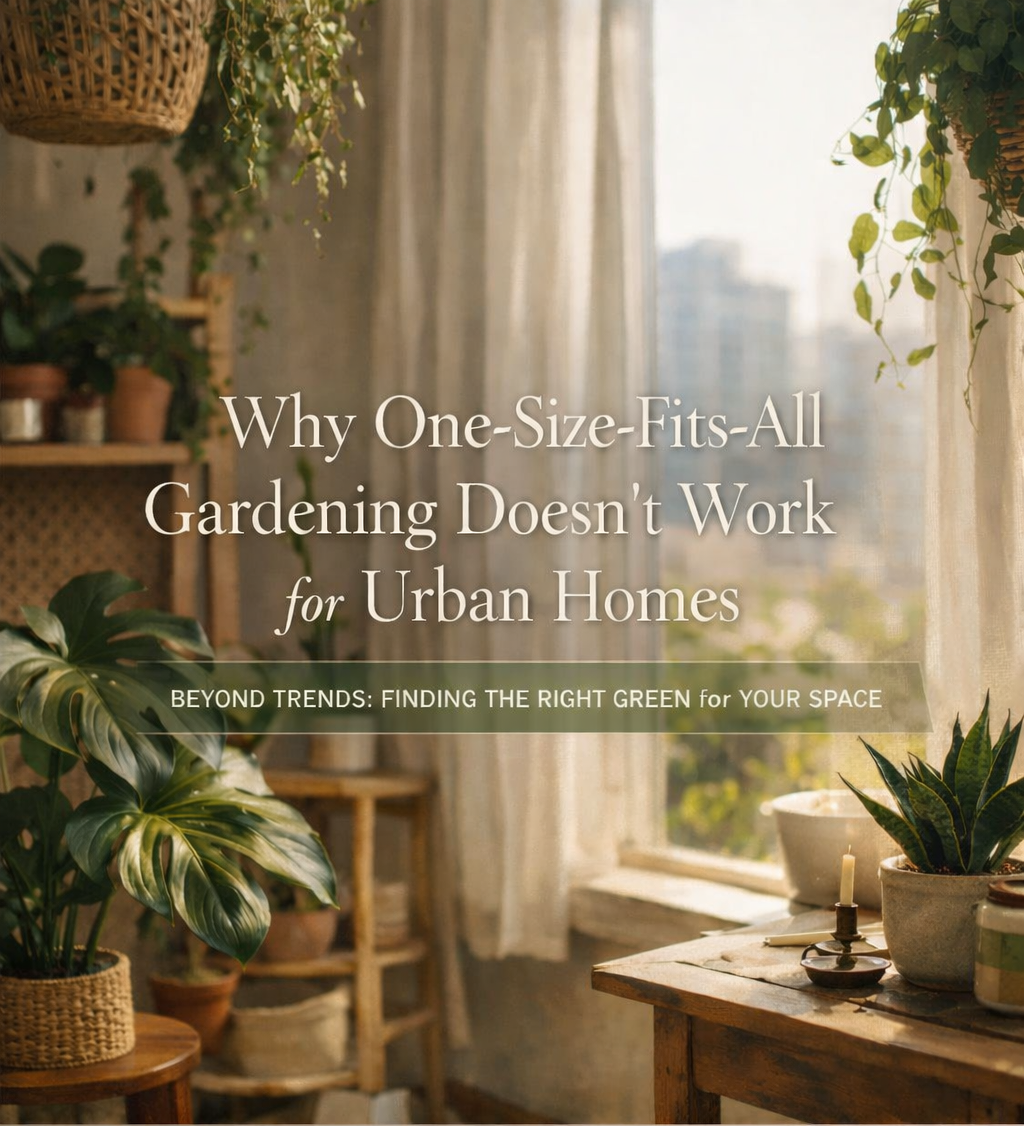
Scroll through social media and you’ll find no shortage of perfectly styled green corners—lush balconies, sunlit living rooms, cascading vines that look effortlessly alive. It’s tempting to save, copy, and recreate these spaces at home. And yet, for many urban dwellers, the result is disappointment: struggling plants, cluttered corners, and the lingering feeling that gardening is harder than it looks.
The truth is simple but often overlooked—gardening is not universal. What thrives in one home may quietly fail in another. Especially in cities, where homes are compact, lifestyles are fast-paced, and environments vary wildly, a one-size-fits-all approach to gardening rarely works.
Every Home Has Its Own Microclimate
Urban homes are full of invisible variables. Direction of light, airflow between buildings, heat trapped by concrete, humidity from nearby roads or water bodies—these factors shape how plants behave.
Two apartments in the same building can experience entirely different conditions. Advice that works for a sun-drenched corner flat may not translate to a shaded, inward-facing home. When gardening advice ignores these nuances, plants pay the price.
Your Lifestyle Matters as Much as Sunlight
Plants don’t just respond to light and water—they respond to people.
Frequent travel, long work hours, pets, children, even weekend habits all influence how much attention a green space can realistically receive. A low-maintenance setup for one person may feel overwhelming to another. When gardening ideas are copied without considering daily routines, they often become sources of stress rather than joy.
Good gardening isn’t about doing more. It’s about doing what fits.
Trends Don’t Always Translate to Real Life
Minimalist planters, oversized fiddle leaf figs, dense vertical gardens—trends can be beautiful, but they’re often designed for visual impact rather than longevity.
In real homes, trends can clash with:
Available space
Natural light patterns
Maintenance capacity
The emotional comfort of the people living there
Gardening that prioritises aesthetics alone often looks good briefly and struggles quietly over time.
Plants Are Living, Not Decorative Objects
One of the biggest misconceptions in urban gardening is treating plants like static décor. Plants grow, adapt, shed, and sometimes outgrow their spaces. They respond to seasons, stress, and care routines.
When greenery is chosen purely to “fill a corner” or match an interior style, it’s easy to feel frustrated when things change. A more thoughtful approach accepts that gardens evolve—and that change is not failure.
Why Personalisation Makes All the Difference
Personalised gardening isn’t about complexity or excess. It’s about intention.
It considers:
The home’s natural conditions
The people living in it
The time and energy available
The purpose the green space is meant to serve—calm, focus, freshness, or connection
When these elements align, plants stop feeling like responsibilities and start feeling like companions.
Rethinking Success in Urban Gardening
Success doesn’t mean replicating a picture-perfect garden. It means creating a space that feels alive, manageable, and genuinely enjoyable.
In urban homes especially, the most successful gardens are the ones designed to fit real lives—not idealised versions of them.
Letting go of one-size-fits-all gardening is often the first step towards building a greener space that truly belongs to you.
Connect
Expert gardening help for urban spaces
Support
Legal
hello@theplantroom.co.in
+91 938 047 5876
© 2025. All rights reserved.